
Physicists, rejoice! I have arrived to geek with you!




 27 Nov 2009, 3:43 am

That's it in a nutshell.
It isn't fully deterministic, in that the sum possible microstates of a history are all present within a coarse grained 4 D Universe, but if you were able to observe the full spread of the interaction you would see that it isn't paradoxical causal violations, or mysterious action at a distance.
"The lower the mass of the
particle, the wider this window of interaction becomes. It follows that it is much
easier to maintain a pair of entangled photons, than a pair of entangled electrons."
this sound like a love song

less ego(mass) free u from inertial behaviors and consequently enable u to maintain much more stable relationship for a longer period of time
so there really is no such thing as black hole and singularity and there was never such an event as the big bang
the rim of a black hole just indicate the point where what we perceived wrongly as the proper casual direction doesn't work any more
a more detailed view of time/space will reveal why cause and effects are inverted at that particular point
and as the resolution at which we see the past increases the data revealed let us interpret casual direction(time) more accurately which lead to better prediction of the future and "smoother" present as expressed by an decreasingly interactive "reality"
BTW
the personal and general history of ourselves also reflects this laws as each day we look at the past in greater detail and up pops the smallest things we never noticed to change our view on the present and influence our set of choices
i also find it interesting that as time goes by historians rewrite history in order to include smaller and smaller events and this data change our view of what really counts so in the present we constantly update the influences maps and consequently our choices which in turn leads to a higher resolution and increased spread of interaction
it's kind of cyclic process with no beginning and no end ( the end only marks our ignorance)
for instance
when this nano history reveals the immense impact of small people and tiny actions more resources are allocated to support such people
when geeks get more attention and resources on the expanse of unskillful and harmful kings and generals which used to populate our history books the "now" become much more effective and interactive and the future much brighter and predictable
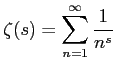 27 Nov 2009, 5:58 pm
Well, it's like the relationship between motion through space and motion through time.
If mass is merely interaction, interaction with just the background isn't just a field connecting masses together, it has to be a modification of the background directly, as GR stated.
GR doesn't say what mass is though, or why it modifies the background, I simply considered if it could be described as a folded portion of the background, and it works quite well.
If time is the direction you move space through, then folding it up into a particle would involve changing how far it is folded through time.
If you can't have it folded through ALL of time when at minimal spatial curvature, it doesn't make sense. If you are reducing from that maximum of full time/no space interaction to Rate = 1 time/classical mass interactions, then continue to R = 0.000000000000001~/Relativistic mass interactions, with the amount of distance represented by a relativistic level of mass being significant in relation to the scale of the Universe itself.

 01 Dec 2009, 3:18 pm
i've been interested in quantum mechanics since i was 16, and my son has a degree in physics (and math and cs).
it's not an aspie thing, it's an intelligence and comfort level thing. the implications can be disturbing to many, plus a lot of folks just don't like to have to think. at all.
anyway, love this thread!
01 Dec 2009, 7:58 pm
Oh, I know it isn't an Aspie thing, but the focus and urge to babble and rant endlessly about our loves is.
It's pretty hard to find people who can keep up when I fully geek into it, and it's always appreciated when I do.
I have made a point to thank everyone who has endured my "self-teaching through teaching others" sessions, particularly giving credit where I was able to look at a problem in a new way that produced especially useful results due to explaining it to someone else.
02 Dec 2009, 6:51 am
I think this sounds (/looks) interesting, but unfortunately I don't fully understand... 
But after all I'm a psychologist, not a physicist 
_________________
1975, ASD: Asperger's Syndrome (diagnosed: October 22, 2009)
Interests: science, experimental psychology, psychophysics, music (listening and playing (guitar)) and visual arts
Don't focus on your weaknesses, focus on your strengths
 02 Dec 2009, 4:28 pm
Go on, do tell.
02 Dec 2009, 4:28 pm
Go on, do tell. Heh, left hand and right hand rule are just a rotation of reference frames!
I have to run some errands, but http://www.keepandshare.com/doc/view.php?id=976477&da=y is a non-mathematical, more layman friendly version I've been working on.
I'm both excited and disappointed.
I've only given it out to perhaps 100 people, but it has like 1600 views, so SOMEONE has been showing it to others, but I've yet to receive solid feedback.
Don't know where to find peer review, I'm an autodidact, technically I stopped school before I started it, when I found out I was testing at high school graduate level early on, I wondered what I was doing there.
Basically, if you know what the Abraham-Lorentz force is, the pathological pre-acceleration solutions implied this to me. There are other such results that crop up, but that one in particular led me to rethink a couple of things, and I noticed that the value for the Rate of Time constant in the GR Gravitational Redshift equations was set so the Rate = 1 occurs at infinite distance from a gravity well.
This means it occurs in flat spacetime, at 0 mass. So the most anything can interact with time hits right at 0 mass. Preserving causality absolutely. Einstein set it there to do that, if you don't, you get extended temporal interaction to explain, which describes quantum mechanics and satisfies the Bell Inequalities!
I'll go more into detail later.
Sorry to disappoint you. But according to what you wrote in that paper, you are thinking that quantum mechanics could be local. In the 1960's John Bell proved that all local deterministic theories contradict the predictions of quantum mechanics when you consider quantum entanglement. That is if you're talking about the EPR paradox. In the 70's, experiments have already confirmed the predictions of quantum mechanics in the case of entanglement. So either nature is fundamentally non-local or non-deterministic. Go to Wikipedia and look up Bell's theorem. Look up the EPR paradox as well because in it Einstein actually assumed locality, calling non-local effects "spooky actions at a distance".
03 Dec 2009, 12:46 am
Local + Deterministic = Forbidden.
Non-local + Deterministic = Current thinking.
Local + Non-Deterministic = The form of QM suggested by adjusting the Rate of Time value in GR.
I'm well acquainted with Bell Theorem's, right down to the mathematical proofs.
03 Dec 2009, 4:26 pm
Local + Deterministic = Forbidden.
Non-local + Deterministic = Current thinking.
Local + Non-Deterministic = The form of QM suggested by adjusting the Rate of Time value in GR.
I'm well acquainted with Bell Theorem's, right down to the mathematical proofs.
Local and non-deterministic is actually current thinking. It is in the current Copenhagen interpretation where the wavefunction is interpreted as the probability of where a particle will be found. For a non-local and deterministic interpretation you can look up David Bohm's formulation. In any case, there's also potentially another problem with your idea. Basic quantum mechanics is not the end of the story. In order for quantum mechanics to be consistent with special relativity, you need quantum field theory. Although quantum field theory is in a sense relativistic quantum mechanics, it internally consistent because it describes all matter and all energy as quantized fields. When you naively try to combine quantum field theory with general relativity by trying to describe GR as a quantum field theory with Feynman diagrams you will quickly run into trouble. It would be able to describe quantum gravity only up to a certain energy cutoff after which all predictions become infinite. This is because a quantum theory of gravity is not renormalizable (the process of canceling infinities in quantum field theories). Many people have tried solving this problem with no success. Also from your previous posts it looks like you trying to come up with a theory of everything. It is not so trivial to come up with such a theory in one go. Einstein himself tried to come up with such a theory for 30 years of his life without success. It turns out he went completely in the wrong direction.
03 Dec 2009, 5:05 pm
Uh, I am referring to acausal behavior. No one has attempted to seriously loosen the rules of causality that I've found, and I've been checking extensively.
I've seen a few models which posit it in a limited manner, the handshake, or uh... oh man, can't remember the one that I think Baez described based on the Feynman model suggestion that the interaction of advanced and ret*d waves produces the present.
Bohmian is a hidden variable formulation, it is indeed non-local but deterministic. What I am positing is akin to rotation of the Bohmian variables from spatial to temporal. So the state of the particle within it's period of temporal interaction is treated as simultaneous.
I'm not doing that actually, I am only suggesting to adjust the Rate of Time constant in the Gravitational Redshift equations.
http://en.wikipedia.org/wiki/Gravitational_red_shift

The rate is faster at larger values of R, away from the apparent direction of acceleration. The rate is zero at r=0, which is the location of the acceleration horizon.
Using the principle of equivalence, Einstein concluded that the same thing holds in any gravitational field, that the rate of clocks R at different heights was altered according to the gravitational field g. When g is slowly varying, it gives the fractional rate of change of the ticking rate. If the ticking rate is everywhere almost this same, the fractional rate of change is the same as the absolute rate of change, so that:

Since the rate of clocks and the gravitational potential have the same derivative, they are the same up to a constant. The constant is chosen to make the clock rate at infinity equal to 1. Since the gravitational potential is zero at infinity:
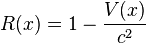
where the speed of light has been restored to make the gravitational potential dimensionless.
When you do this, it doesn't seem like it has any meaning at first, the only reason the implication appeared obvious to me is that I've been studying Relativity for all of my life (it was my first "obsessive interest" when I was six), and recognized what this change would do to the way objects interact with time.
In short, the effect we describe as time dilation simply means the Rate of Time for that object is less than one. As you trend towards the speed of light, R reduces towards a limit of zero.
The further an object is moved through space, the less it moves through time. Essentially.
I knew that if you increased the Rate of Time interaction beyond one, it would allow objects to interact with what appeared to be portions of the past and future as if they were simultaneous.
Just as a highly dilated object moving at relativistic velocities observes a time from a narrower angle, an observer at rest near Rate = 1 observes time from a narrower angle than one with R > 1.
If the point where R = 1 occurs at a nonzero mass, anything with less mass would behave in an odd manner, they would interact with effects and causes simultaneously within a brief window. They would be interacting with time at a broader angle, literally.
When you place the R = 1 point at zero mass, as Einstein did, you prevent any of this funny business.
There is no other reason to place it there, and it requires an odd contortion of the curve to do that. Putting it near the Planck Mass coincides with roughly where quantum effects seem to disappear from the stage, and leaves all of the smaller mass objects with this weird behavior. I noted that behavior is akin to Bohmian Mechanics with the pilot wave variable replaced by the state of the particle across an extended plane of simultaneity.
This naturally renormalizes itself. The limit of the extended temporal interaction period replaces the need to find a Landau Pole and renormalize past it.
I've been working on this for the last 23 years. Obsessively. This isn't my first, or even fifteenth try at fixing this problem. This is the first one I can not falsify as of yet.
Incidentally, I did not set out specifically with this model to try to fix the problem, when I poked at that loose end (a constant with no experimental justification), the rest of it simply unraveled, and a quantum theory fell out of GR into my lap.
Einstein knew what I am describing here worked, I can say this for sure.
Know how I am aware of this? That Rate of Time value. There is no experimental result which supports it's position of R = 1 at 0 Mass. There are experimental results which suggest we are close to R = 1 at our classical energy levels, R = .97 or so as I recall.
The only reason to slide it over there as he did was to eliminate any acausal effects from cropping up, as he felt that would be worse than non-locality by far.
The technical term for the Bell Inequalities btw, is Local, and Counterfactual Definite. Local realism is also used.
QFT is not local, if it was it would work with SR and GR, the problem is that in defining an effect as having influence at another position in space without any elapsed time between them, you define a preferred plane of simultaneity. This smashes SR and GR like a hammer. Can not work.
I've done extensive research since I first proposed this idea, I've found some papers exploring retrocausal influences, but never found one that mentioned this rate of time issue. Einstein hid it VERY well, people are loathe to consider shedding any measure of causality, even if it would only be loosened at subclassical scales.
Oh, incidentally, the issue with renormalizing a graviton is that you would have to calculate the interaction across the entire span of time within the 4 D Universe.
_________________
If it works, do it.
If it doesn't work, do something else.
~Courtney's Theme

 04 Dec 2009, 4:24 am
Oh, I've been trying to do so.
Difficult to get in touch when you're outside the scholastic loop.
I've gotten feedback from a few people, but mostly stuff like Jono was pointing out. I did my homework though, I can't find a disproof anywhere as of yet.
Why I've been rigorously reteaching myself math (aided by courtneys numerals, so much crisper in my head!), so I can formulate a ground up proof for publishing. I don't want to simply say I had an idea, I want it to be provable.
04 Dec 2009, 10:39 am
@ justMax:
Good luck proving your theory and trying to get it published!
_________________
1975, ASD: Asperger's Syndrome (diagnosed: October 22, 2009)
Interests: science, experimental psychology, psychophysics, music (listening and playing (guitar)) and visual arts
Don't focus on your weaknesses, focus on your strengths
04 Dec 2009, 5:11 pm
Thanks, I'll need it without the "official" education.
Ah the joys of being an autodidact... it irks me that so many people sit and write hate mail to physicists known for being staunch supporters of relativity, because they rarely answer email these days if not from a student email address.
Still cranking away, figure it will help when I am able to produce a full proof, and people will be more open to consideration of non-stringy models when the LHC fails to find a Higgs Boson or curled up extra dimensions.
Be nice to point out that I have a year old (now) prediction of the exact type of dark matter particle they will find (tentatively discovered at the Tevatron a couple months after I said the LHC would find it, but the Tev lacks the power to fully probe for it), and so on.
Technically though, I "postdicted" quantum theory out of general relativity, part of why I'm so confident about this stuff.
_________________
If it works, do it.
If it doesn't work, do something else.
~Courtney's Theme
05 Dec 2009, 6:01 pm
I'm a bit skeptical, how do you get Schroedinger or Dirac's equation from general relativity. Physically, Schroedinger's and Dirac's equations describe something different from Einstein's Feild Equations. The former describes matter and energy on small scales, the latter describes gravity on large scales. Einstein's Field Equations describe a classical tensor field. I say classical because it hasn't been quantized.
06 Dec 2009, 2:43 am
Well, that is what I am working on describing.
The thing I found is more of an explanation needing a subject to apply it on.
It just happens that a form of QM similar to Bohmian forms fits it well.
Oh, remembered another reason this struck me.
If you were to take say, a piece of notebook paper, halve it, halve it again, and keep doing this.
You would be able to get roughly 114 or so cuts til you reached the Planck scale.
If you instead doubled it repeatedly, you would get roughly 90 or so expansions until it was the same scale as the entire Universe.
We're closer to THAT end of the scale, than the bottom end. So why should the variation between R = .97~ at our classical mass levels, and R = 1 stretch all the way to zero mass?
If it were somewhere in the middle, roughly 100 cuts/expansions either way, it would actually explain why we've failed so badly at getting QFT and GR to cooperate. We're looking at time the wrong way on the scales where quantum effects come into play.


