Aspergers Motivational Theory
I have developed a theory on motivation for people with AS because I felt I had no motivation to do things, was depressed etc. So I wanted to share in case anyone found it useful.
The theory takes as its point of departure that,
- NT brains are motivated by group-belonging, hence perform to be accepted by the group (this is because NTs are group-hunters, the only way for them to survive is by having a group to hunt with).
- AS brains are motivated by not being enslaved by anyone, hence perform to not become a slave of other people (this is because AS people are solo-hunters, the only way for them to survive is by not being enslaved so that they can keep hunting solo).
So the basic motivation for people with AS is to not be slave to anyone. How can one achieve not becoming enslaved?
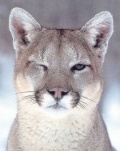
By being independent. That is why independence of others is so important for people with AS (and for cats).
This brings about the following scale:
"Mentally ill" (Enslaved) <-- Independence (Slave to noone) <-- Becoming too social (Enslaved)
This is to be understood as follows:
On the one hand, if you do not take action, you will become a part of the social hierarchy in the sense that you will be considered "mentally ill" for not taking action. This will make you a slave to others.
On the other hand, if you become too social, you will also become a part of the social hierarchy in the sense that you will be forced to obey orders from higher-raking people (which is probably many for someone with AS!). This will make you a slave to those higher-ranking people.
The only way to avoid becoming a slave of others is to take action, but not get too socially involved (in a NT sense of socially involved). I supposed that is where many of us are at this point.
I do like to think that having autism or adhd traits makes me a lone hunter and the only reason I'm struggling with these traits right now is because my hunting and survival skills are obsolete in the world we live in right now.
Perhaps my problem with super sensory issues and trouble sleeping is related to being a nocturnal hunter too.
I wish there was more studies about these kind of things.
I guess I'm a lone hunter. I never fit in at work. I was always an outsider to the groups there. I participated in no social outings, no parties, nothing. I still felt I was a slave to the occupation and it had me by the balls because I needed the money to pay the rent. I'd rather not be a slave to anyone, but realistically, I had to be to make money to pay the rent.
_________________
One Day At A Time.
His first book: http://www.amazon.com/Wetland-Other-Sto ... B00E0NVTL2
His second book: https://www.amazon.com/COMMONER-VAGABON ... oks&sr=1-2
His blog: http://seattlewordsmith.wordpress.com/
yournamehere
Veteran
Joined: 22 Oct 2013
Gender: Male
Posts: 1,673
Location: Roaming 150 square miles somewhere in north america
Slavery is a bold overstated word. Don't believe anyone wants to be an actual slave.
I see your point. In animals, group, pack animals, or nomads would be a better interpretation.
The wolf, or the bear.
They are all family oriented too, however, when a bear cub gets old enough, he's gotta go.
The male bear... not soo much.
- NT brains are motivated aby group-belonging, hence perform to be accepted by the group (this is because NTs are group-hunters, the only way for them to survive is by having a group to hunt with).
- AS brains are motivated by not being enslaved by anyone, hence perform to not become a slave of other people (this is because AS people are solo-hunters, the only way for them to survive is by not being enslaved so that they can keep hunting solo).
So the basic motivation for people with AS is to not be slave to anyone. How can one achieve not becoming enslaved? By being independent.
Interesting theory. I know, for myself, I prize my independence. I wonder what it is about our cognitive processing that motivates us so.
Sweetleaf
Veteran
Joined: 6 Jan 2011
Age: 36
Gender: Female
Posts: 35,278
Location: Somewhere in Colorado
Without having any evidence to support it, I definitely think it does.
We were meant to hunt alone at night, catching small prey for our survival. Super senses for sensing and awake at night for better hunting success.
Thus, not very fit for hunting with the big dog packs we get forced into in the workplace.
yournamehere
Veteran
Joined: 22 Oct 2013
Gender: Male
Posts: 1,673
Location: Roaming 150 square miles somewhere in north america
I agree. It was more to get my point across. Dogs are more willing to be "slaves" to their "masters" than cats are for instance. Subservient would probably be a better word.
It is not slavery. It is knowing who is dominant. That always gets challenged. The alfa. In an NT social structure, it kinda works the same way. There are all kinds of dominance issues, and control factors. For instance, social dominance orientation, and group leadership. All of which are usually pertained to sociopaths. They love slaves, and want to control everything. In fact about the only thing that bothers them is being out of control, and being exposed with their masks off. They are something, yet don't want anyone to know.
I don't see how this theory could apply to autism as a whole, as that is what Asperger's is.. autism. Perhaps the highest functioning individuals with Asperger's were solo hunters, but for anyone with more intense circumstances, I honestly can't see how they would have functioned effectively as a 'solo hunter' in the past (can elaborate if needed). Even with that said, individuals with higher functioning Asperger's often crave social interaction and acceptance. I can't see the theory making sense.
Hypersensitive senses may be seen by some as a possible explanation for 'solo-hunting' at night (a long stretch as 'normal senses' are sufficient already), though what about those that are hyposensitive? What about clumsiness/proprioceptive dysfunction? Vestibular disturbances certainly wouldn't help someone hunt solo. What if you were caught during the day and had to run.. sensory overload? What about meltdowns or shutdowns caused by unpredictable events? I'm not sure how the dependance on routine would tie into all this, though I'd assume it would have a negative effect.
Babies/children with autism are often 'detached and in their own world'. Would a parent back in those times be constantly forcing their defenseless child (who would likely combat them) to follow? I can only envisage immense difficulties here.
Aside from that:
+ How would such a theory accommodate for introverted neurotypicals, or any other neurotypical that dislikes grouping (being that you're basing it off current times)?
+ How would such a theory accommodate for extroverted AS individuals, or any individual whom has Asperger's, but has a strong desire to socialize and 'fit in' (be accepted by a group)?
I think it's dangerous dividing AS and NT into separate 'brains', as the 'difference in neurology' doesn't refer to a completely different brain. At your core, you are still human.
EDIT I - Personally, I don't really see a potential argument due to any distinguishable difference regarding independence. Many neurotypical individuals are dependant on others for happiness, success in the work place etc. I'm not purposely being offensive, but to put it bluntly many autistics are dependant on others throughout their lives for support too, though it may not be the same kind. Independence is a goal for most people.
EDIT II - Depression causes a lack of motivation. There are likely motivational differences between individuals with Asperger's and the average neurotypical, though I couldn't see them being too vast. Based on what I've read and researched, I'd personally think most motivational differences are more due to what an individual may experience as a result of having Asperger's, rather than the Asperger's itself.
_________________
Unapologetically, Norny.
-chronically drunk

Last edited by Norny on 25 Feb 2014, 11:16 pm, edited 2 times in total.
Well if that's the case then why does the theory concern Asperger's rather than individual traits? An individual with Asperger's may have traits that give a worse disposition for solo hunting. Why does a neurotypical not have any features that give a better disposition for solo-hunting? You could argue that relative to a hyposensitive individual, the neurotypical with 'normal' senses is far more capable of solo-hunting.
I'm sorry if I sound brash but I really just don't see how it could make sense.
_________________
Unapologetically, Norny.
-chronically drunk

I always enjoy your topics...I don't like hierarchy and I often mess with the social ladder and ignore my superiors. No sense of where I belong so I just choose to be anywhere I want! I will not look up to anyone or respect them just because everyone else does. I do not rely on anyone, complete independence. When I see famous people I ignore them, if I see politicians I look away and pretend I don't know who they are, If I see sports stars I roll my eyes...someone rich rolls up in a nice car I want to tell they their car is ugly and they wasted their money. I joke around with my boss and talk to him like we are equal. I am not a yes sir person.
_________________
In order to prevent being blasted into the stone age by an asteroid we better start colonizing space as soon as possible.
Just look at the dinosaurs, they died out because they didn't have a space program.
Exactly like me.
I think the reason we do not like to people-please is because it implies we are "lower" than those we please. That would mean mental captivity for us.
yournamehere
Veteran
Joined: 22 Oct 2013
Gender: Male
Posts: 1,673
Location: Roaming 150 square miles somewhere in north america
That sounds just like me too.