
Insomnia Solutions



 27 Jun 2020, 6:52 pm

This is not a psychological problem. I have some medical issue. I don't know what it is; the doctors have not figured it out. Sometimes falling asleep takes forever; sometimes I wake up early for no identifiable reason and can't get back to sleep (that's what's happening now).
I have tried about 3 different sleep medications; they all leave me unbearably groggy for the entire following day and at least one didn't help me sleep at all. I tried halving the doses; same problem. Melatonin doesn't work, just makes me groggy too.
This has been going on for nearly twenty years, on and off. I make sure to eat before bedtime, I make sure I'm warm, I wait until I'm sleepy, I normally exercise nearly every day (have taken the week off to recover from a vitamin deficiency). It doesn't always work. There's no noise waking me up now, so I don't know what the problem is.
Any experiences with this? The doctor said sleep problems are common for autistic people...so here I am asking.
 27 Jun 2020, 7:08 pm
Can recognize a lot of your experiences in your post ..... it’s hard to try to force sleep . Have been doing
Drastic things to sleep . And if am able to lucky enough I almost feel normal the next day. But kinda gave up on that bright eyed and bushy tailed awhile back . But occasionally can get up slowly and at my own speed ,and I do much better . Melatonin is a minor sleep aid another amino acid L_tyrphtophan is a good one as well. Up to 1000mg. A night .
_________________
Diagnosed hfa
Loves velcro,
 27 Jun 2020, 7:32 pm
Sleep is really important. I am not sure I can help you with your particular problem. But this is my observations:
One tool to restore the core of an infant is to allow the child a good nights sleep. Many mothers use similar routines when putting their child to bed. She might start by giving the child a warm bath just before bedtime. Next, the mother places the infant in a bed in a very dark and quiet environment and wrap the child tightly in a swaddling blanket. She might sing a lullaby or read a bedtime story.
The same need for restful sleep [to restore the core] still applies as an infant grows into an adult.
So the techniques a mother uses to put her child to sleep becomes a template for sleep therapy. These techniques are methods for bringing stress relief and restoration of the core brain of a child/adolescent/adult Aspie using the mechanism called sleep. They include many elements such as quiet, pressure, warmth to the body’s core, darkness, a secure environment, a cool sleeping environment, songs and bedtime stories.
I instinctively knew sleep was very important to my well-being and stress mitigation at my core. As a result I made it one of my priorities in life. For sleep therapy to be effective, one must create an environment that is conducive to sleep. So as an adult, I made several changes to my lifestyle to ensure my ability to rest. So without really pondering the reason why from a psychological perspective, I just implemented my sensed feelings into concrete actions. The following approaches are examples of streamlining your sleep environment:
An Environment of Peace and Quiet
As a teenage and young adult, I went on hiking excursions. Some were day trips, others were overnighters and some lasted for a week or two. I slept under the stars. At night, I laid out a tube tent on the ground, and then I rolled out an insulation pad and then place a feather down sleeping bag on top. I crawled into my sleeping bag and looked out at million of stars overhead and fell asleep.
Normally this was not dangerous. On one or two rare occasions a rattlesnake would crawl into someone’s sleeping bag in the middle of the night attracted by the person’s body warmth. But the snake did not coil up and one could gingerly crawl out of their sleeping bag without incident. From those experiences, I learned that I like the sounds of nature and not artificial sounds in a city.
So one of the changes I made was where I choose to live. I moved away from the constant hustle and bustle, from the unending drone of city noises to the peaceful natural sound of the countryside. And it is in this location that my wife and I built our own home.
I constructed the house to be sound proof. Fiberglass insulation in the walls provides very good sound deadening properties. Rather than chose conventional building practices, I used 2x6 construction in the outer walls which allowed me to installed 6-inch fiberglass insulation in all outside walls, 4-inch insulation in interior walls and 12-inch insulation in the ceilings. The cost of this extra insulation was minimal, perhaps around 0.7% of the total cost of the constructed house. The house is spooky quiet. I have watched major weather (wind, rain, snow) storms pass from inside in near dead silence. The interior insulation keeps sound from traveling from one room to the next.
I need peace and quiet to sleep. As a result I minimized noise and light and interruptions.
Pressure
As infants, we were wrapped in a swaddling blanket. This suspended our arms from flailing around in the night. It brought comfort. So one of the methods to simulate this effect is to use weighted blankets. For me there is nothing more pleasant than sleep under a thick feather down comforter on a cold winter night.
Safety and Security
One needs to feel safe and secure in order to get a good night’s sleep. Many times infants are relocated to a baby nursery shortly after birth. When an infant wakes up in the dark dead silence of night, it can be a traumatic experience for the little ones. They want the security knowing that their mother is right there to meet their needs and protect them. As they grow they learn to adapt by grasping onto surrogates, such as security blankets, and stuffed animals. If it is scary, we can always hide beneath the blanket. It will protect us if we cannot see the scary. You will often see a young child clinging tenaciously to their stuffed animal whenever they leave home. These are our nighttime companions. We want to feel safe especially when we go to bed and sleep.
As an adult, the same need for safety and security applies for sleeping. It is difficult to sleep under the threat of break-ins, burglaries, assaults, kidnapping, murders and war. Individuals require a safe and secure environment for restful sleep. Many adults manage this requirement in several ways. They chose where they live. They focus on low crime areas. Some integrate security tools into their homes such as security alarms, gated communities, driveway alarms, and automatic fire alarms. In areas that are prone to natural disasters, such as tornadoes, one can build storm shelters and rely on tornado sirens and weather alerts to manage threats. Many people transition from stuffed animals to real animals (such as cats and dogs) to provide a measure of security.
Core Body Warmth
As a child, many times our mothers would give us a warm bath before she put us to bed. The ritual of a bath was to relax us. So one additional tool is to interweave a pattern of bath time just before bed to facilitate restful sleep.
In my particular case, I took a different approach. This was really my wife’s idea. Over 45 years ago we purchased a waterbed and we have used it ever since. A waterbed is heated. [In a way it provides the relaxation similar to a hot bath before bedtime.] The waterbed mattress conforms to the body. During half the year when the weather is cold, we place a fluffy down comforter over the bed. In my opinion, it is the most comfortable way to get good nights sleep. [It is almost analogous to returning to the mother’s womb. The only thing it is missing is a thumper to simulate the mother’s heartbeat.] Generally when I crawl into bed, I fall into a deep sleep within 60 seconds.
Darkness
In one of my first jobs after graduating from college, I was on travel for 2 years working double shifts (swing and graveyard). I worked 6 days a week. The work was critical and the timing was critical. All I did was sleep and work, and work and sleep. In order to rest, I had to find a place to sleep without daylight shining through. The room needed to be completely dark. I stumbled onto a hotel that accommodated my needs. It had special curtains that completely blocked of the light. They were called blackout drapes. Today you might find them with some added features. These are called “Soundproof, thermal insulated, blackout curtains”.
Sleeping mask is another way one can block out the light.
Cool Head
I sleep in a cool room by design. During the winter the bedroom is around 15 °F cooler than the center of the house. If the weather is too hot in the summer, I turn the air conditioner on. The hypothalamus is the part of the brain that regulates body temperature through sweating and increases our blood flow. When excessive hot temperatures strike, it can prevent nerve fibers in the brain from properly transmitting those cool down messages. This is when people are at risk for heat exhaustion or even heat stroke. Eventually, these extreme temperatures affect the brain and can injure other vital organs. That is why people with heat stroke often experience symptoms like:
* Throbbing headaches
* Mental confusion
* Dizziness or light-headedness
* Loss of consciousness
Hot and humid weather does more than affect your physical health. It can also seriously impact your mental well-being. As temperatures get higher, studies find it is harder for people to experience positive emotions like joy and happiness. Some of the reasons why mood is influenced by hot weather could be because of it:
* Exacerbates daily stressors
* Increases risky behaviors
* Causes sleeping difficulties
* Increases risk of dehydration
Body Limitations
One of the main destroyers of sleep is Obstructive Sleep Apnea. Therefore one of the constructive approaches for ensuring a good night sleeps is to correct for this limitation.
In children, the most common cause of obstructive sleep apnea is enlarged tonsils and adenoids in the upper airway. Infections may cause these glands to enlarge. Large adenoids may completely block the nasal passages and make breathing through the nose difficult or impossible. There are many muscles in the head and neck that help to keep the airway open. When a person (child or adult) falls asleep, muscle tone tends to decrease, thus, allowing tissues to fold closer together. If the airway is partially closed (by enlarged glands) while awake, falling asleep may result in a completely closed passage. The treatment is surgery and removal of the tonsils (tonsillectomy) and/or adenoids (adenoidectomy).
In adults, obesity is one of the main causes of obstructive sleep apnea. Therefore weight reduction such as Roux-en-Y Gastric Bypass Surgery or Gastric Sleeve Surgery are forms of bariatric surgery help remedy this limitation.
Another sleep destroyer is drugs. Many forms of prescription medicine exhibit side effects that interfer with normal sleep patterns. A remedy is to transition to other medicine without this side effect.
Bedtime Stories
Who believes that the telling of bedtime stories should be restricted to children only! Today bedtime stories are available to help adults relax and fall sleep. For example Phoebe Smith produced a story “Blue Gold”. It is read by a
soft-spoken English comedian and actor Stephen Fry. It’s written in the second person so that listeners can picture themselves meandering lazily through the lavender fields of the sleepy villages of Provence in France. Smith begins by describing the aromas of lavender “instantly mellowing into a smooth and soothing scent” before going into a brief history of the aromatic plant known for its calming properties. The just under 25-minute story has been listened to 15 million times.
_________________
Author of Practical Preparations for a Coronavirus Pandemic.
A very unique plan. As Dr. Paul Thompson wrote, "This is the very best paper on the virus I have ever seen."
 27 Jun 2020, 8:07 pm
I've been on Seroquel (Quetiapine) for about 8 years with overall very good results. It works really well to get me to sleep and keep me asleep, but I will feel groggy the next day (as you mentioned, Starkid) if I sleep the "recommended time for an adult" (7-8 hours). Instead, I need to sleep longer, closer to 9-10 hours, because of the drug's side-effects. But as long as I do sleep longer, I feel fine (that is to say, I feel great -- energized, well-rested, etc., whatever you want to call it). So I just accept I need to sleep about 9-10 hours and I'll stay in bed as long as needed to get it. It's not exactly ideal -- I calculated that I'm missing out on years of my life this way for the long term...I've decreased the dose and come down as much as I can off of it. I'm not on a super-high dose but I think without it altogether I would slip back into the sleep issues I had in the past. So the alternative is very likely some sleep disorder (which is what led to getting the drug in the first place) that will have very unfortunate effects on my psyche. Seroquel is generally not prescribed to treat a sleep disorder, but is used to treat schizophrenia/schizoaffective disorder (I was diagnosed with this very possibly because of the sleep disorder that brought it out in me). Of course not everyone who suffers insomnia does become psychotic...most will not...but what the drug does for me is helps me sleep and then my symptoms don't come back. That's how it has been so far, anyway.
 27 Jun 2020, 9:30 pm
Starkid,
Look into histamine intolerance. I have had sleep problems similar to yours all my life and that seems to be what my problem is. You will find a lot out there on the subject so do your homework. The illustrious medical profession in our great nation (US) does not recognize such a problem exists, possibly because there's no medication they can prescribe for it. That may be what you are dealing with or it may not; your research should tell you.
_________________
Neurodiverse (Aspie) score: 120 of 200
Neurotypical (non-autistic) score: 74 of 200
Very likely neurodiverse (Aspie)
AQ = 38 MBTI = ISTJ Gender = Non-binary
Dear_one
Veteran

Joined: 2 Feb 2008
Age: 77
Gender: Male
Posts: 5,721
Location: Where the Great Plains meet the Northern Pines
28 Jun 2020, 6:51 am
When I first got sleep problems, a friend who had been dealing with them for years advised me to not bother with pills, as she was worse off with them overall. The trouble I have with most herbal tea, melatonin, and similar aids is that they remind me of other desperate nights when I first tried them, and thus get a reverse placebo effect. So, it is probably best to try solutions on nights when they are more likely to work.
My noise sensitivity goes away if I feel safe because someone else will deal with any actual problems. Having to be ready to respond quickly to a wake up is not restful. I really feel sorry for street people.
One tip that may help is keeping a journal, so that you can close out each day, and make a list for the next day, leaving you nothing to remember overnight.
Trying to meditate is about half as restful as sleep, and also a pretty good way to fall asleep as well, so that's what I do when I need to sleep but can't.
28 Jun 2020, 11:12 am
I'm definitely better off using pills than than when I wasn't (by a long shot). I used to have fairly bad sleeping problems that started in adolescence, and they'd have very troublesome effects in my daily life. There were periods when they'd go away, and I seemed to be doing okay, but they always came back. I tried all kinds of OTC remedies and every lifestyle choice change you could think of. Then again I do have a diagnosis of schizoaffective disorder (a heavy diagnosis)...but I feel ASD is also a fairly significant diagnosis although maybe not quite *as* serious (because psychosis and mood disorder is not part of the picture). For me (in my case not necessarily others'), I just figure it's like a lot of commensurate medical problems others might experience -- I need medication for it. The doctors understand and accept this and that's why I get the medication in the first place.
funeralxempire
Veteran

Joined: 27 Oct 2014
Age: 41
Gender: Non-binary
Posts: 34,202
Location: Right over your left shoulder
28 Jun 2020, 4:13 pm
Have you tried hitting a bowl or two before you sleep? 
_________________
The Party told you to reject the evidence of your eyes and ears. It was their final, most essential command.
If you're not careful, the newspapers will have you hating the people who are being oppressed, and loving the people who are doing the oppressing. —Malcolm X
Just a reminder: under international law, an occupying power has no right of self-defense, and those who are occupied have the right and duty to liberate themselves by any means possible.
28 Jun 2020, 8:38 pm
I thought about insomnia solutions some more and there is one other item worth mentioning.
Clean Air
Sleeping in a clean environment improves sleep quality. Four months ago I purchase a small air cleaner and placed it in my bedroom. I did this primarily to counter the threat from the COVID-19 coronavirus. I have been using it every night since. It kills viruses, including the coronavirus. It has improved my sleep noticeably. In the past, many times I would wake up in the morning congested. I would get up and begin hacking, after a few minutes I would go to the bathroom and spit out a mouthful of phlegm. That was my morning routine. But since I began using this air cleaner, I no longer need to do this anymore because my lungs are clean when I wake up. It also reduced the number of times that I wake up during the night. Sometimes I sleep the entire night without getting up. So as far as recommendations for insomnia, I have decided to include this in the mix.
Now there are all types of air cleaners. I have used HEPA filters in the past but because the air has to be forced through the filter, it takes a large fan motor and they tend to be noisy. Too noisy for me to sleep with. But I did some searching on the internet and came across a model that was ideal. It was called an OION Technologies B-1000. It was less than $100. Because the unit does not have a HEPA, the fan is whisper quiet. Because it has a small motor it runs on very little electricity, less than 7.5 watts, a little more than a night light.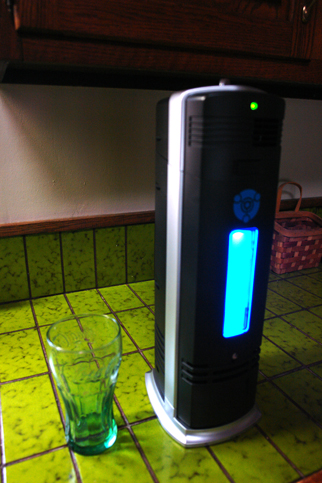
This unit contains a small far ultraviolet light (UVC), which effectively kills viruses (including coronaviruses), bacteria, and mold spores. The unit also contains an ionizer, releasing negative ions into the air which bind to microscopic particles, creating particle clusters that bind with a center collection rod within the machine. The unit emits a small amount of ozone, which also kills germs, freshens the air, and deodorizes. It is a small unit. I put a coca-cola glass next to it for perspective. It will only clean one room. It works well in cleaning the air in my bedroom. At the moment it is out of stock on Amazon, probably because many people realized it was effective against the coronavirus and bought them all up. But it should show back up on store shelves in a few months.
Here is a link that describes the unit. OION Technologies B-1000 Ionic Air Purifier Review
I was so pleased with the unit that I bought one for each of my daughters. I heat with wood. But my daughters have conventional HVAC units for their homes. At the moment, I am trying to have a whole house UVC system installed in their homes. These are installed in the return duct that runs into the furnace. They are a bit more expensive but once installed it would protect them from almost all biological threats that are airborne. The unit I am looking at is called a REME-HALO. Here is a link that describes it. REME HALO® Whole Home In-Duct Air Purifier They run around $600 but that does not include installation. It is commercial grade. This is an item that a professional Heating and Cooling Contractor would need to install. I managed to get my hands on one for a few minutes and took a picture of the unit. It runs on 24 volts and therefore requires a transformer that isn't supplied with the unit. At the moment, many of these units are in short supply.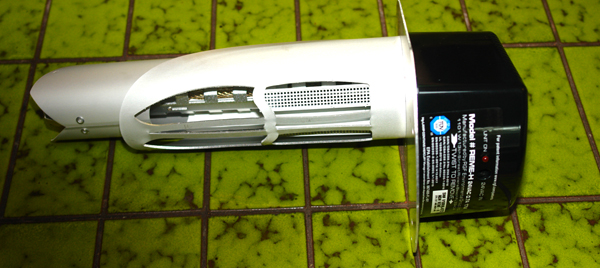
If you have problems sleeping, some of the problems may be caused by allergies. Some of the problems might be related to viruses, bacteria and mold spores that you come in contact with. So this is one more step to ensure a good nights sleep.
_________________
Author of Practical Preparations for a Coronavirus Pandemic.
A very unique plan. As Dr. Paul Thompson wrote, "This is the very best paper on the virus I have ever seen."

 29 Jun 2020, 12:50 pm
It's interesting that you say sleep problems are common for autistic people. I didn't know that.
My own sleep is a major issue. I have no choice when I sleep, because I just can't fall asleep, not when I want to and not when it would be a normally expected time to fall asleep, after having been awake about 16 hours. There are times when I am awake for 30 hours, though that is fairly unusual. But I sleep at odd times, whenever I can sleep. I'm lucky that I don't have to stick to a schedule, though it's inconvenient for a number of reasons to be asleep for half the day and up most of the night.
I keep a log of my sleep times. This is for the most recent 6 days:
Jun23 8am - 3:40pm
Jun 24 1:30pm - 6pm
Jun25 6:40am - 7:20pm
Jun26 4:30pm - 10:30pm
Jun27 5:30pm - 9:30pm
Jun28 12noon - 9:30pm
I don't really have advice except maybe just accept it? That's what I have had to do.
Dear_one
Veteran
Joined: 2 Feb 2008
Age: 77
Gender: Male
Posts: 5,721
Location: Where the Great Plains meet the Northern Pines
29 Jun 2020, 1:54 pm
Around age 20, I was only sleeping 3 or 4 times a week, about 15 hours per session. I wanted to finish each job before sleeping on it, because I'd come back with more ideas and lose money. Things stayed erratic until one day when I was woken up from exactly the wrong phase of sleep, and had two weeks of amnesia. After that, I was afraid of sleeping, as it might end the same way again, and had several years when I struggled to sleep enough to drive safely, and very rarely got enough to be cheerful and flexible. Finally, I decided to at least control my meal times, and that is finally re-establishing some circadian rhythm.
 07 Jul 2020, 11:11 am
You asked for ideas to help with insomnia.
But then you responded with:
I generally though you were really asking for help, but I must have been mistaken!
_________________
Author of Practical Preparations for a Coronavirus Pandemic.
A very unique plan. As Dr. Paul Thompson wrote, "This is the very best paper on the virus I have ever seen."


