It's usually kind of subtle...
You could use someone who speaks really formally. Not all of us do that, but it's common. Talk like you're reading out loud, and use very precise words. Mostly you'll see that in people in their midteens or younger; older people will most likely have taught themselves casual speech. Or you could just do the "shy" thing.
Movements--well, you probably won't see really obvious, constant stims most of the time, not with most Aspies. You could try stiff posture or gestures like hair-twirling, touching fingers to thumb repetitively, playing with the edges of clothing or with a small object, that kind of thing. Think "fidgeting".
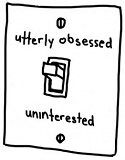
Many Aspies will have a favorite topic. For example, I have one Aspie friend who spends a lot of time talking about her cats, and another who is fascinated with mathematics. So if yours has a subject like that, he can come back to it often. It probably won't be extremely weird, because if you are AS and you have a very narrow or odd interest, you learn not to talk about it. On the other hand, more mainstream interests can serve as conversation starters or even bridges to friendship. So it's not uncommon to hear an Aspie talking rather often about a favorite computer game or movie, for example. I tend to go back to psychology and physics, but I'm odder than most.
The big problem with your improv thing is that if you are portraying AS realistically, it may not be obvious enough to get across to the audience, unless your audience has a lot of Aspie/auties in it.